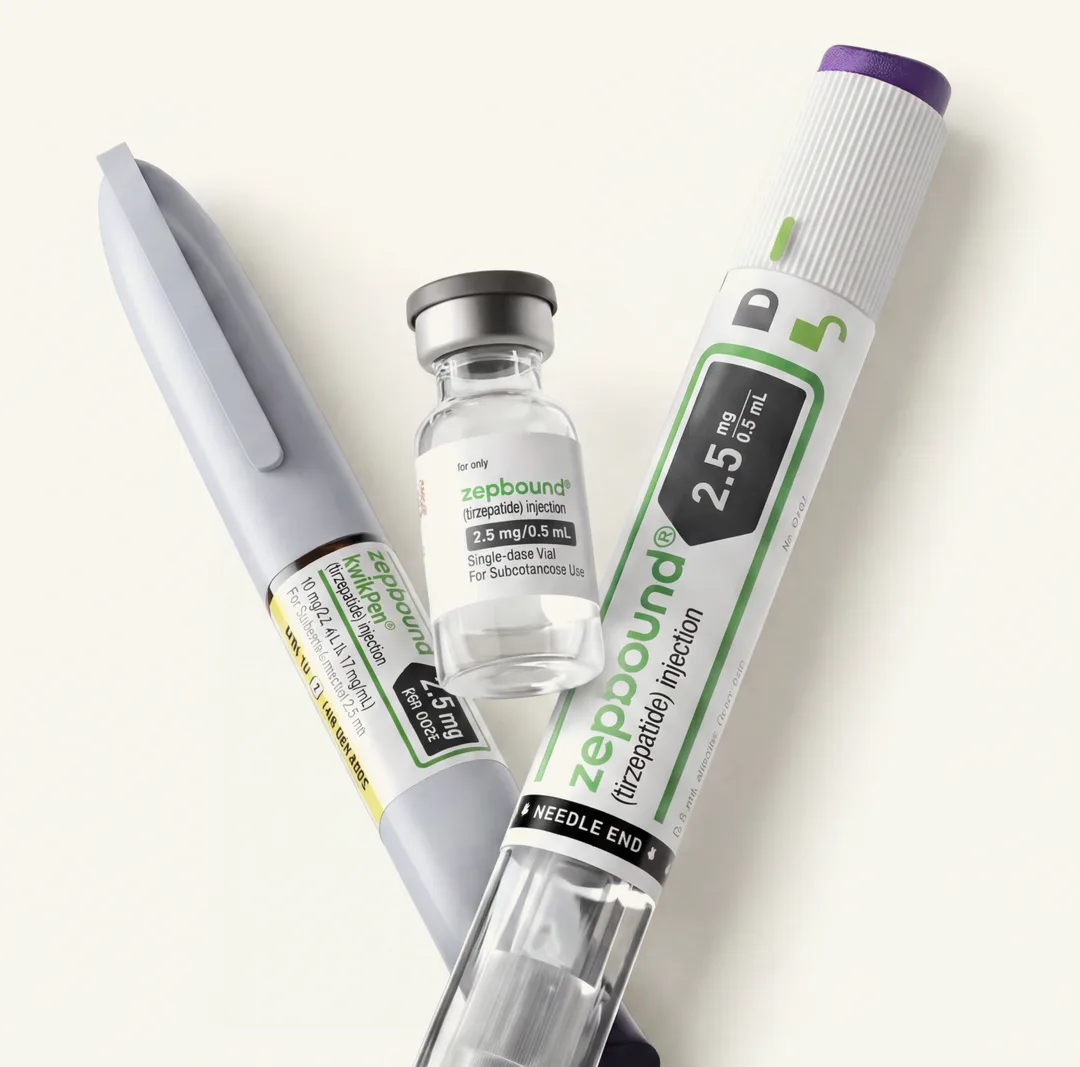
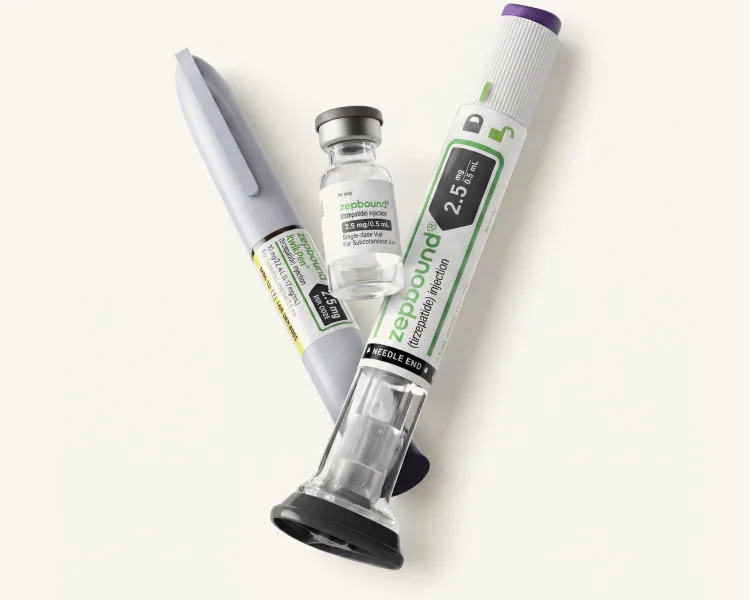
Warnings – Zepbound® may cause tumors in the thyroid, including thyroid cancer. Watch for possible symptoms, such as a lump or swelling in the neck, hoarseness, trouble swallowing, or shortness of breath. If you have any of these symptoms, tell your clinician.
- Do not use Zepbound® if you or any of your family have ever had a type of thyroid cancer called medullary thyroid carcinoma (MTC).
- Do not use Zepbound® if you have Multiple Endocrine Neoplasia syndrome type 2 (MEN 2).
- Do not use Zepbound® if you have had a serious allergic reaction to tirzepatide or any of the ingredients in Zepbound®.
KwikPen®: Do not share your KwikPen® with other people, even if the pen needle has been changed. You may give other people a serious infection or get a serious infection from them.
Zepbound® may cause serious side effects, including:
- Severe stomach problems. Stomach problems, sometimes severe, have been reported in people who use Zepbound®. Tell your clinician if you have stomach problems that are severe or will not go away.
- Dehydration leading to kidney problems. Diarrhea, nausea, and vomiting may cause a loss of fluids (dehydration), which may cause kidney problems. It is important for you to drink fluids to help reduce your chance of dehydration. Tell your clinician right away if you have nausea, vomiting, or diarrhea that does not go away.
- Gallbladder problems. Gallbladder problems have happened in some people who use Zepbound®. Tell your clinician right away if you get symptoms of gallbladder problems, which may include pain in your upper stomach (abdomen), fever, yellowing of skin or eyes (jaundice), or clay-colored stools.
- Inflammation of the pancreas (pancreatitis). Stop using Zepbound® and tell your clinician right away if you have severe pain in your stomach area (abdomen) that will not go away, with or without nausea or vomiting. You may feel the pain from your abdomen to your back.
- Serious allergic reactions. Stop using Zepbound® and get medical help right away if you have any symptoms of a serious allergic reaction, including swelling of your face, lips, tongue or throat, problems breathing or swallowing, severe rash or itching, fainting or feeling dizzy, or very rapid heartbeat.
- Low blood sugar (hypoglycemia). Your risk for getting low blood sugar may be higher if you use Zepbound® with medicines that can cause low blood sugar, such as a sulfonylurea or insulin. Signs and symptoms of low blood sugar may include dizziness or light-headedness, sweating, confusion or drowsiness, headache, blurred vision, slurred speech, shakiness, fast heartbeat, anxiety, irritability, mood changes, hunger, weakness or feeling jittery.
- Changes in vision in patients with type 2 diabetes. Tell your clinician if you have changes in vision during treatment with Zepbound®.
- Food or liquid getting into the lungs during surgery or other procedures that use anesthesia or deep sleepiness (deep sedation). Zepbound® may increase the chance of food getting into your lungs during surgery or other procedures. Tell all your healthcare providers that you are taking Zepbound® before you are scheduled to have surgery or other procedures.
Common side effects:
- The most common side effects of Zepbound® include nausea, diarrhea, vomiting, constipation, stomach (abdominal) pain, indigestion, injection site reactions, feeling tired, allergic reactions, belching, hair loss, and heartburn. These are not all the possible side effects of Zepbound®. Talk to your clinician about any side effect that bothers you or doesn’t go away.
- Tell your doctor if you have any side effects. You can report side effects at 1-800-FDA-1088 or www.fda.gov/medwatch.
Before using Zepbound®:
- Your clinician should show you how to use Zepbound® before you use it for the first time.
- Talk to your clinician about low blood sugar and how to manage it. Tell your clinician if you are taking medicines to treat diabetes including an insulin or sulfonylurea.
- If you take birth control pills by mouth, talk to your clinician before you use Zepbound®. Birth control pills may not work as well while using Zepbound®. Your clinician may recommend another type of birth control for 4 weeks after you start Zepbound® and for 4 weeks after each increase in your dose of Zepbound®.

 /
GLP-1Rx Program (Telehealth for Branded Meds)
GLP-1Rx Program
/
GLP-1Rx Program (Telehealth for Branded Meds)
GLP-1Rx Program